

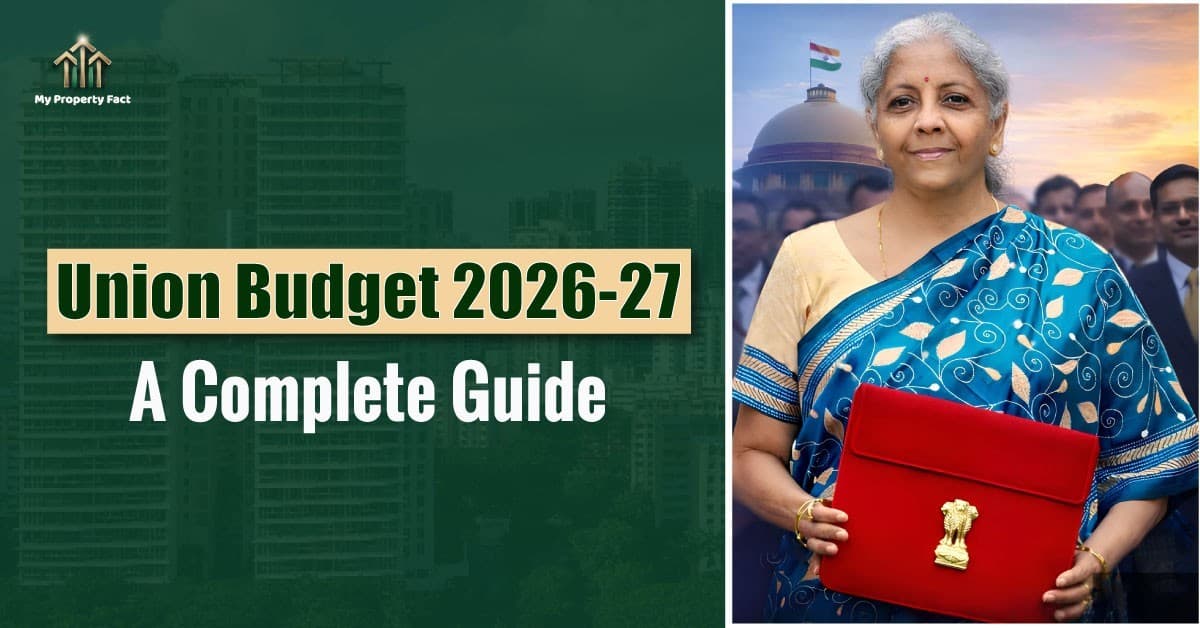
Union Budget 2026–27: Complete Guide & Key Highlights
On February 1, 2026, Finance Minister Nirmala Sitharaman presented the Union Budget for 2026-27 in the Indian Parliament, outlining plans for national growth and development. This budget aims to sustain economic growth, build top-tier infrastructure, advanced manufacturing, improve social welfare programs, & keep India globally competitive, all while keeping government finances strong.
In this blog, we will explore the key sectors highlighted in the Union Budget and discuss important announcements & policy measures taken.
Let us dive more into the blog!
Union Budget 2026-27 At A Glance:
|
Component |
FY 2026–27 Figure |
|
Total Receipts |
₹36.5 lakh crore |
|
Total Expenditure |
₹53.5 lakh crore |
|
Public Capital Expenditure |
₹12.2 lakh crore |
|
Net Tax Collections |
₹28.7 lakh crore |
|
Fiscal Deficit |
Projected ~4.3% of GDP |
|
Debt-to-GDP Target |
~55.6% |
Core Vision and Strategic Priorities
There are three key priorities in the Budget:
- Accelerated and continuous economic growth
- Strengthening Household finances
- Equitable development throughout regions and sectors
These three priorities combine investments focused policies with social welfare programs, demonstrating both economic growth and equity.
Union Budget 2026-27: Sector-wise Highlights
1. Infrastructure & Connectivity
|
Initiative |
Budget Priorities |
Details & Impact |
|
Capital Expenditures(Investment) |
₹12.2 lakh crore |
Record High, Stimulates Economic Growth & Job Creation. |
|
High-Speed Rail Corridors |
7 New High SpeedRail Corridors. |
Mumbai-Pune, Hyderabad-Bangalore, Other Corridors - Supply Chain Facilitator By Reducing Travel Time & Improving Trade. |
|
Freight Corridors & National Water Ways |
20 National Water Ways |
Faster & Cheaper Movement Of Cargo By Land OrSea Will Improve Supply Chains. |
|
Ports & Coastal Shipping |
Ship repair & port development |
Enhances trade, maritime services, creates skilledjobs |
Impact:
Reduced transport duration.
Stronger urban-rural integration.
Boost to construction & related activities.
2. Manufacturing Sector
|
Initiative |
Allocation / Numbers |
Details & Impact |
|
Biopharma SHAKTI |
₹10,000 crore (5 years) |
Improve pharmaceutical manufacturing; reduce imports |
|
Semiconductor Mission 2.0 |
₹76,000 crore (over5 years) |
Support semiconductor manufacturing & R&D; enhance tech capabilities |
|
Electronics Components Scheme |
₹40,000 crore |
Promote domestic manufacturing; affordable electronics |
|
Textile & Container Manufacturing |
₹10,000 crore |
Mega textile parks & industrial containers; job creation |
Impact:
1. More jobs creation
2. Reduced reliance on imports
3. Make exports more competitive.
3. MSME & Enterprises
|
Initiative |
Allocation / Numbers |
Details & Impact |
|
SME Growth Fund |
₹10,000 crore |
Support expansion & innovation |
|
y Support for Micro Enterprises |
₹2,000 crore |
Improved cash flow, rapid growth |
|
TReDS Platform Strengthening |
N/A |
Improved invoice discounting, simplified digital compliance |
Impact:
- Improved access to credit
- Simplified operations for SMEs
- Stimulation of entrepreneurship ecosystem
4. Taxation & Finance Reforms
|
Reform |
Numbers / Change |
Details & Impact |
|
Income Tax Slabs |
No major change Stability for taxpayers |
|
|
Minimum Alternate Tax (MAT) |
Reduced to 14% Lower tax burden for corporates |
|
|
TCS on Foreign Travel & Education |
Reduced to 2% |
Cheaper overseas education & tourism |
|
Customs Duty Adjustments |
Varied |
Health, electronics, EV components cheaper |
Impact:
- Simplified tax structure
- Relief for businesses & individuals
- Incentives for key sectors
5. Healthcare & Social Sector
|
Initiative |
Allocation/Numbers |
Details & Impact |
|
New All India Ayurveda I Institutes |
N/A |
Encourage Ayurvedic practices & research |
|
Customs Duty Exemption on Critical Drugs |
N/A |
Accessible healthcare, focusing on cancer drugs |
|
Health & Skill Development |
N/A |
Health-related education, hospital facilities |
Impact:
- Affordable healthcare
- Enhanced medical education
- Employment generation in healthcare & research areas
6. Educational reforms
|
Initiative |
Allocation / Numbers |
Details & Impact |
|
University Townships |
N/A |
Close to Industrial Corridors to Access Skilled Workers. |
|
Girls' Hostels |
Every district |
Accessibility for Higher Education. |
|
Digital Learning & STEM Programs |
N/A |
Support Developing Skills and Preparing for Future Workforce. |
Impact:
1. Increased accessibility
to post-secondary education.
2.Employment opportunities matching the needs of
industry growth
3.Diversity in educational access.
7. Agriculture & Allied Sectors
|
Initiative |
Allocation / Numbers |
Details & Impact |
|
High-Value Crop Support |
N/A |
Coconut, cashew, almonds cultivation |
|
Rural Value Chain Development N/A |
Improve the market access for producers and increase income |
|
|
Rural Infrastructure |
N/A |
Build roads, support farmers with storage or assist with irrigation |
Impact :
1. Improved farmers incomes
2. Improved rural connectivity
3. Improved agricultural productivity & growth of agri-business
8. Real estate & Housing
|
Initiative |
Numbers |
Effects |
|
Affordable Housing Target |
2.8 crore homes |
Expands housing access for low & middle-income groups |
|
CLSS Home Loan Subsidy |
Up to 6.5% interest subsidy |
Makes home loans cheaper f or first-time homebuyers |
|
Infrastructure Capex Boost |
₹12.2 lakh crore |
Better connectivity raises property demand |
|
Smart Cities Development |
100+ cities |
Propels the growth of urban real estate |
|
REIT Market Size |
₹50,000+ crore |
Attracts institutional investment |
|
Warehousing Expansion |
150 million sq. ft added |
Boosts the value of logistics & industrial real estate |
Impact:
1. More housing supply and affordability
2. More housing supply and affordability
3. Strong job creation in construction and materials industries
Conclusion
The Union Budget 2026 has its main focus on increased economic growth. Investment in infrastructure, manufacturing, housing, etc aims to boost more jobs & increased connectivity
across the country. Overall the budget has its main target for investment led growth and long term economic development.
If you want to invest smartly in the coming year, this Investor’s Guide 2026: Real Estate Simplified explains everything in easy terms.
Frequently Asked Questions (FAQs)
1. What is the Union Budget 2026-27?
Ans- The Union Budget 2026-27 is the annual financial statement of the Government of India, which includes details about the revenue, expenditure, taxation policies, and development plans for the coming financial year.
2. What are the major focus areas of Budget 2026-27?
Ans- The budget focuses on infrastructure development, manufacturing, job creation, social welfare, expansion of the digital economy, and fiscal responsibility.
3. What are the implications of the budget on the real estate sector?
Ans- Increased infrastructure development, development of urban areas, and encouragement for REITs are expected to increase the demand for housing, commercial real estate, and development in Tier II & III cities.
4. What does the increased capital expenditure imply?
Ans- The increased capital expenditure implies that the government is spending more on roads, railways, metro, logistics, and infrastructure in cities, which boosts economic growth and job creation.
5. What does Budget 2026-27 offer to the manufacturing sector?
Ans- The budget offers support to the manufacturing sector through initiatives such as production-linked incentives, semiconductor schemes, and development of industrial corridors.
6. Are there any advantages for the middle class?
Ans- The budget always has provisions for tax reforms, simplification of compliance, and financial inclusion, which benefit taxpayers and increase their disposable income.
7. How does the budget help small businesses and startups?
Ans- The government offers support to MSMEs through access to credit, digital solutions, simplified compliance, and innovation funding.


.png&w=48&q=75 "X (Twitter)")


