

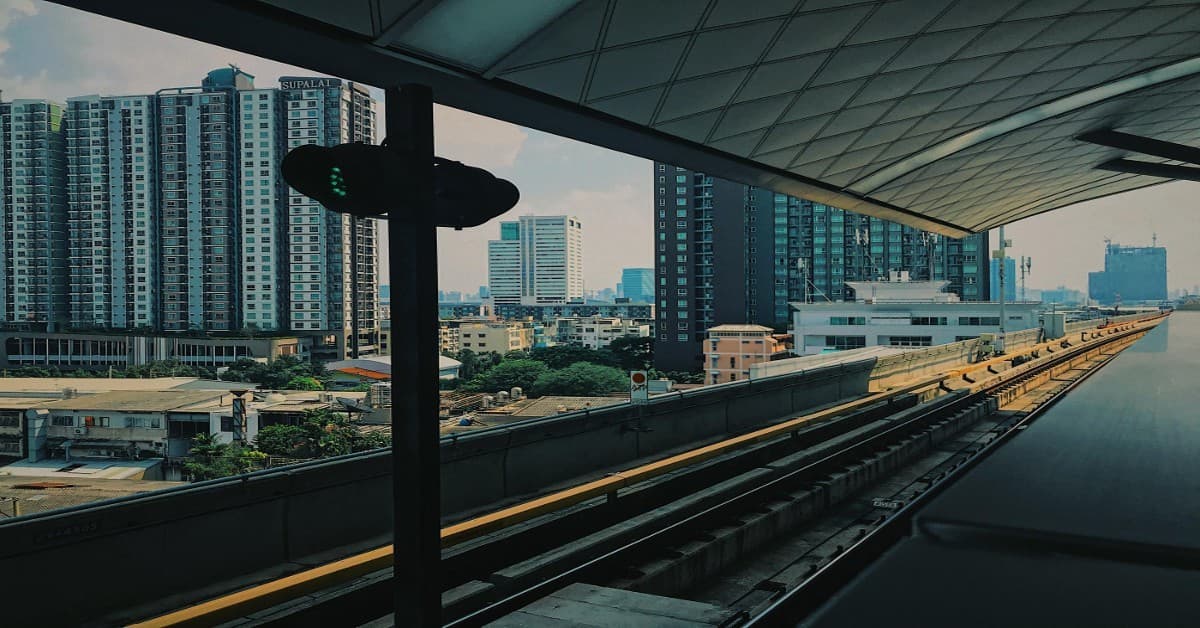
The Tube of Desire: Why Delhi–NCR Homes Get Pricier the Closer You Slide to the Metro
If you want to watch economics wearing lipstick, watch what happens to real estate when a metro map expands. Steel rails, due to property values, what froth does to cappuccino: they create volume out of air. Not because concrete moves faster than before, but because people’s minds do. In Delhi–NCR, proximity to a station doesn’t just shorten commutes; it alters how buyers and tenants perceive time, risk, status and choice. The result is a tidy “access premium” that shows up first in rents, then in sale values, and finally because governments are attentive to circular rates and zoning. Complete Guide of Living in Delhi.
Let’s state the
unfashionably obvious. Travel time is not measured in minutes; it’s measured in
certainty. A 35-minute drive that might become 75 on a Tuesday is
psychologically worse than a 42-minute metro ride that is reliably 42 every
day. Reliability is a luxury good masquerading as public transport. This is why
being within easy walking distance, roughly 500 to 800 metres of a station, so
often confers a double-digit price uplift in Delhi–NCR. The market’s
rule-of-thumb: within 500 metres, expect the fattest premium (often
mid-teens), and watch it decay with every additional gate, flyover, or goat you
must dodge.
The Geography of Convenience (and Why “As the Crow Flies” Is a Lie)
Real humans don’t fly. We crossroads, wait at signals, and detour around parked scooters and mango carts. So, the premium depends on true walking distance and actual pedestrian quality. A flat 700-metre stroll under trees can beat a perilous 300-metre dash across an arterial road. Which means the same geometric circle around a station contains very different psychological radii. Sidewalks, shade, feeder buses, and lighting inflate value by converting distance into ease.
This is most visible
around interchanges. Rajiv Chowk, Sikanderpur, Botanical Garden, the places
where lines kiss create access not to one corridor but to optionality
itself. Optionality is catnip to the human brain. It is the comfort of knowing
you can live in Sector 52, brunch in Khan Market, and still be at a client
meeting in Cyber City without bargaining with a driver who calls you “boss” but
charges like a venture capitalist. Interchanges, therefore, broaden the radius
of the premium and make it stickier over time.
How the Premium Travels Across NCR
Delhi’s vast network spills benefit across borders. The Noida Aqua Line reshaped demand in pockets like Sector 50–52 and Greater Noida; the Rapid Metro stitched DLF Cyber City and Golf Course Road into the Yellow Line’s labour market. Faridabad’s Violet Line stops (Old Faridabad, Neelam Chowk) and Ghaziabad’s Blue Line edges (Vaishali, Kaushambi) show the same pattern: higher footfall, quicker job access, stronger rents, firmer resale values. These aren’t mere transport effects; they’re market-making effects. Shops lease faster. Offices accept slightly smaller floorplates because commute friction has shrunk. Tenants self-select: the metro-adjacent flat attracts the punctual, the cost-conscious and the Uber-fatigued.
And the premium often
appears before the trains. Property markets are gossiped with
calculators. Prices tend to move in steps, announcement, approval,
construction, and opening, with anticipatory bumps when alignments are
confirmed or interchange benefits crystallise. Speculators call it “future
connectivity”; psychologists might call it imagination monetised.
TOD: Three Letters That Quietly Lift Land
Now to the boring bit that’s secretly thrilling: Transit-Oriented Development (TOD). Delhi’s planning playbooks designate 500-metre influence zones around metro stations for denser, mixed-use development. Allow a little more Floor Area Ratio here, relax a setback there, and presto, residual land value rises. This is not magic; it’s maths. If a parcel can host more saleable or lettable area because of TOD, the land under it is worth more today, even before you pour a cubic metre of concrete. Policymakers know this, which is why national frameworks encourage cities to fund metros using Value Capture tools, betterment levies, premium FAR, the works. The public invests in rails; private owners share a sliver of the upside; the city gets more of the tax base in places where people want to be. Alchemy, but with spreadsheets.
Retail and Offices: Footfall as a Financial Instrument
Retailers worship predictable bodies per hour, which the metro delivers. A station mouth is a perpetual motion machine for ground-floor rents. Small cafés sprout like basil around a pizza: not because the pie is better, but because the slices are closer to mouths. Offices also benefit: HR can widen the talent catchment without widening salaries. A five-day commute that is ten minutes faster might save only 50 minutes a week, but it saves 50 minutes every week. Compounded, that is not time; that is sanity. Companies pay for sanity in lease terms and stickier employees.
The Psychology Behind the Numbers
Why mid-teens within 500 metres? Because the value isn’t just time saved; it’s risk removed. Risk of surge pricing. Risk of parking hunts. Risk of being late to a client who likes you a little less with each minute. The metro is a hedge contract against life’s volatility. Hedges are worth more the closer you are to the exchange. That’s why the premiums are strongest at interchanges and along lines that connect major job centres, Connaught Place, Nehru Place, Noida Expressway, and Cyber City.
There’s also a quiet signalling effect. A “near-metro” address signals modernity, safety and a certain urbanity, useful in rental listings and matrimonial negotiations alike. And there’s a spousal acceptance factor: if one partner can keep the car while the other gets reliable rail, the household’s domestic negotiation cost collapses. The flat wins.
The Nonlinearities to Watch
- First/last mile quality can amplify or erase the premium. A station hemmed in by a highway with no safe crossing is a station for cars, not feet.
- Noise and crowds nibble at top-end residential willingness to pay. High-end buyers may seek a one-block offset: close enough to reap, far enough to sleep.
- Plotting assemblages near stations is hard. Many tiny owners; few large ones. Supply doesn’t surge as easily, which lets the premium persist longer than theory might predict.
- Gentrification risk is real: rents rise faster than local incomes, changing the area’s character. If you’re investing for yield, understand who your future tenant is and whether your building welcomes them.
A Buyer’s Pocket Guide to Pricing the Metro
- Measure the walk as you’d do it. If Google says 450 metres but you need to play Frogger twice, call it 800. Your knees are the truth.
- Interchanges are gold. Sikanderpur (Rapid ↔ Yellow), Botanical Garden (Blue ↔ Magenta), Rajiv Chowk (Blue ↔ Yellow): expect broader, more durable premiums.
- Link to jobs, not just lines. A station that cuts 20–30 minutes daily to a major employment node punch above its weight.
- TOD = upside option. If you’re inside a notified influence zone, higher FAR and mixed-use permissions can lift not just you’re building but the comps around you.
- Track the pipeline. Markets price stories. Follow alignments, approvals and interchanges; the premium often arrives in instalments before the ribbon-cutting.
- Retail ground floors near exits are cash machines (with the caveat that rents may already price this in). For residential, consider one lane back from the station for sound-sleep arbitrage.
What This Means for Delhi–NCR’s Urban Future
Metros don’t just move people; they rearrange where life can happen. They compress mental maps, allowing Noida residents to adopt South Delhi habits and Gurugram workers to sleep in East Delhi without feeling like long-haul truckers. As these mental maps shrink, mixed-use becomes viable in places where it wasn’t. The city becomes a network of walkable islands strung on a steel thread. If you want a resilient portfolio, own land on those islands.
And yet, a gentle warning. A metro won’t rescue a poor product. If the façade leaks, the lifts wheeze, and the association fights like a reality show, the station 300 metres away simply makes it easier for tenants to inspect a better building. Proximity is a multiplier of quality, not its substitute.
In sum, proximity to the metro is the rare urban amenity that compounds. It compounds time saved, trips made, shops discovered, jobs reachable, and most importantly, certainty felt. Delhi’s rails convert chaos into choreography, and markets will always pay for choreography. Stand within 500 metres of a station, and you can almost hear it: the faint hum of trains, and the louder one of willing buyers.


.png&w=48&q=75 "X (Twitter)")


