

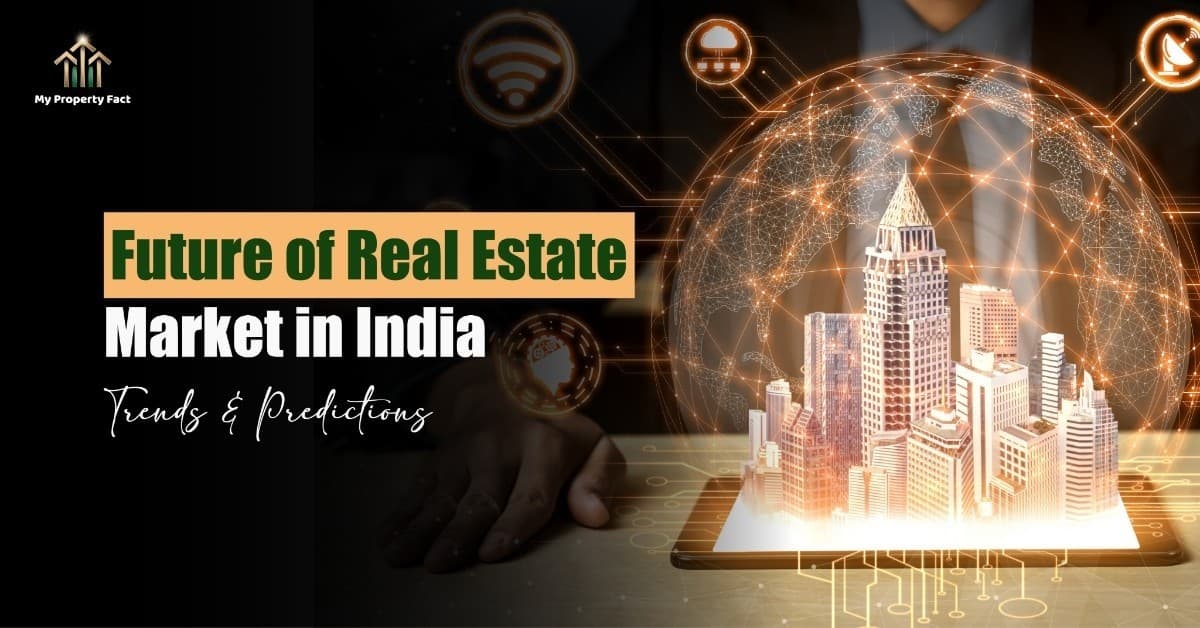
Future of Real Estate Market in India: Trends & Predictions
The real estate sector in India can very well be termed as one of the quickest-growing and dynamically transforming sectors in the overall Indian economy. This is because of several reasons, like the population growth at a very rapid rate, growing urbanization, and transforming consumer preferences and demands in modern society. Thus, we can expect revolutionary and dramatic changes in the future of this sector. Whether it is related to the use of technology, a high emphasis on sustainability, the demand for affordable housing, or the growth and development of Tier-II and Tier-III cities, the real estate sector is continually transforming to serve the multifaceted needs of a changing country.
The Growing Importance of Real Estate in India
The real estate industry is an important part of the economy in India, contributing substantially to the national GDP and to employment. The real estate industry includes residential real estate, commercial real estate, retail real estate, and industrial real estate, with each real estate market having its unique market features and characteristics. As India continues to urbanize and grow their middle class, the rise in demand for housing and commercial real estate development will grow steadily. Economic growth will also be aided by government policies, infrastructure development, and foreign investments. The real estate sector will be core to India's growth and development for many years to come.
Economic Contributions and Employment
The real estate sector is perhaps the largest contributor of economic activity and, in almost all economies, has the second place in job creation, only to agriculture. Real estate is a source of jobs for many sectors of industry, in addition to creating direct jobs in construction, manufacturing, and service activities through their employment of millions of workers in both urban and rural locations. With a single job being created in the real estate sector, multiple jobs will also be created locally. The continued expansion of real estate sector will continue to expand its contributions to GDP and national wealth and development.
Urbanization as a Catalyst
The swift rate of urbanization in India continues to be one of the major factors driving growth in the real estate sector. Millions of residents migrate from rural parts of the country to our cities and nearby villages, resulting in increased demands for housing, commercial space, and infrastructure. This migration stems from the opportunity for better jobs, education, and living standards and has led to cities bustling with activity. Large metro cities like Mumbai, Delhi, and Bengaluru have always been the front runners of this trend, but it can be seen that cities in Tier-II and Tier-III segments are now contributing to this urbanization. Infrastructure and increased connectivity are key enablers of this urbanization trend. Recent unprecedented Government initiatives - including new highways, metro rail, and regional airports - have made cities like Lucknow, Indore, and Coimbatore easier to access, increasing attraction for residents and businesses alike. As pressure is reduced on our metro cities, new real estate markets filled with opportunity are opening up in less dense areas. Affordable land pricing relative to quality of life is attracting developers and investors to these less populated but growing cities. The growth and presence of the real estate sector will see a more balanced pattern of growth, as urbanization not only redefines our skylines but also offers new economic opportunities across our country.
Key Trends Shaping the Future
The landscape of real estate in India is changing with a plethora of game-changing trends. Technology advancement, evolving living patterns, and increased focus on sustainability are some of the reasons that are fueling the sector's changes. Some of the major trends that will continue to influence the trajectory of this sector.
1. Technology in Real Estate
Technology is transforming how individuals buy and sell real estate in India, while simultaneously improving property management practices. Property Technology (PropTech) is the solution that has provided customers with a more sophisticated and straightforward method of buying and selling real estate and provided property markets with increased efficiency and more accessible methods of transacting real estate.
2. Virtual Reality (VR) and Augmented Reality (AR) -
Technologies like Virtual Reality (VR) and Augmented Reality (AR) are transforming the experience of buying housing. Now potential home buyers can tour all properties from all around the world without ever leaving their homes, thereby reducing the stress and worry of visiting homes in person. This capability enables developers to walk through projects in greater detail and helps buyers visualize and picture their future homes.
Artificial Intelligence and Data Analytics
Artificial Intelligence (AI) and big data analysis are providing the means for improved and more informed decision-making. Developers are using the predictive capabilities of AI to analyze market trends, property valuations, and where demand is being created. Ultimately, buyers can more easily discover relevant AI-assisted recommendations to select the property that meets their unique expectations.
Blockchain for Transparency
Blockchain technology is playing an increasing role because it enables secure and transparent real estate transactions, and is, therefore, contributing to increasing transparency in real estate transactions, reducing fraud, and validating titles - all of which lead to increasing trust in real estate, therefore increasing investors and buyers.
3. Sustainability and Green Buildings
With the rise of environmental sensitivities, the topic of sustainability has increasingly been a key consideration in real estate development. Green buildings have become a strong trend, and green buildings are no longer confined to any specific type of development, as residential and commercial buildings now contain green features.
Sustainable Construction Practices
Sustainable materials are now being utilized for development, and eco-efficient design practices are being adopted for both residential and commercial buildings, enabling developers to achieve sustainable buildings. Developers are also growing in awareness of the marketability of green features such as solar panels, graywater systems, and smart energy systems to appeal to environmentally-minded buyers.
Government Action in Support of Green Initiatives
Government programs, such as the Smart Cities program supporting the development of sustainable cities, IGBC certifications, and LEED certifications, are providing a policy environment to promote green development. Governments increasing the number of buildings able to be certified as green will offer greater marketability for those buildings.
4. Rise of Affordable Housing
Affordable housing remains a critical need in India, driven by a growing population and rapid urbanization. The government and private sector are working together to address this demand, making it a key trend in the real estate market’s future.
Government Schemes and Incentives
Programs like the Pradhan Mantri Awas Yojana (PMAY) aim to provide “Housing for All” by offering subsidies and incentives to developers and buyers. These initiatives are expected to boost the supply of affordable homes, particularly in urban and semi-urban areas.
Shift in Consumer Preferences
Post-pandemic, many buyers are prioritizing larger, more affordable homes with access to green spaces and work-from-home facilities. This shift is prompting developers to focus on budget-friendly projects that cater to middle-income families.
5. Growth of Tier-II and Tier-III Cities
Although metropolitan centers representative of Dharavi, Mumbai, Delhi, and Bengaluru have constituted a major segment of the real estate market for a long time now, the Tier-II and Tier-III cities are now emerging as new growth engines. This is largely due to infrastructure advancements and the economy continuing to modernize.
Infrastructure Development
As a result of notable government spending improvements to infrastructure, proximity to both railways and airports in these smaller metropolitan cities like Lucknow, Indore, and Coimbatore is continually improving. Improving access has created interest in development opportunities in these regions for both developers and investors.
Increased Demand in Residential and Commercial Space
With expanding businesses expanding Tier-II and Tier-III cities, demand for increases in office space, retail space, and housing. Tier-II and Tier-III cities have lower property pricing and superior quality of life, attracting both individuals and investors alike to the offerings of these cities..
6. Luxury Housing Boom
The luxury real estate sector has become more robust due to an increase in disposable income and desire for high-end living. High-net-worth buyers are the main drivers behind the demand for ultra-high-end, luxury homes.
Changing Demographics and Aspirations
An increasing number of high-net-worth buyers, including non-resident Indians (NRIs), are seeking luxury real estate investment. Luxury homes typically have smart home technology, private pools, and concierge service, all of which are attractive to buyers in the top tier of the market.
Important Markets for Luxury Real Estate
Markets with luxury real estate include Mumbai, Delhi NCR, and the City of Bengaluru. Additional developing markets for luxury homes include Pune, Hyderabad, and Goa. There is also increasing demand for second homes in recreational settings, most notably on the waterfront.
Predictions for the Future
Taking into account the current market dynamics and its trends, we can suggest some possible scenarios for the future of India's real estate market. The forecast scenarios provide an indication of the strength of the market and some of the obstacles it may potentially encounter.
1. Expansion in Market Size
The real estate market size in India is likely to increase significantly. According to the India Brand Equity Foundation (IBEF), estimates suggest that by 2030, India's real estate market can be valued at $1 trillion. This increase will come from demand across residential, commercial, and industrial areas.
Residential Sector Growth
Residential properties are likely to maintain the leading role in the market, supported by urbanization and government-supported affordable housing initiatives. Sales volumes are likely to increase if more people participate in homeownership.
Commercial Real Estate Evolution
The commercial sector will evolve into smart workspaces and co-working spaces. There will continue to be growing demand for quality spaces in cities that are driven by technology sectors, such as Bengaluru and Hyderabad, in support of information technology sectors that challenge commercial space demands.
2. Increased Foreign Investment
Foreign Direct Investment (FDI) in real estate is likely to increase as regulations ease and the economic outlook stabilizes. International investors will place stronger investment demand in cities with sound infrastructure and business potential, increasing growth in the real estate market.
FDI Impact on Development
FDI will increase large-scale development projects, such as smart cities and integrated townships. In addition to new investment capital, FDI will result in improved overall quality of construction and introduce global standards to the Indian real estate market.
3. Technology-Driven Market Transformation
Technology will be everywhere, and Property Technology (PropTech) will be what drives real estate transactions. From simple online transactions to smart home technology, these technologies are revolutionizing the way business is done in the industry. PropTech is speeding up processes such as searching for property, selling, and managing properties. Web-based systems now enable buyers to search listings, sign contracts, and even secure financing without entering an office, and it's all quicker and more convenient. This technology-driven revolution is not only revolutionizing the industry but also bringing it to increasingly more buyers, sellers, and investors.
Smart Home Development
Smart homes are one of the largest forces behind this tech revolution. Smart homes, which are fitted with Internet of Things (IoT) devices, enable residents to control and check simple functions—security systems, lighting, and power consumption—via smartphones or voice commands. Smart locks and smart thermostats are gaining traction, and they are attracting tech-savvy consumers looking for convenience and sustainability. Increased usage directly affects property values since smart-enabled homes are more costly and sought after. As demand for such homes grows, developers are investing in IoT integration, and smart homes are the most sought-after feature of the future market.
4. Focus on Sustainability
Sustainability will move from being a specialist and niche concern to becoming a common market standard that is well understood. Developers who make a deliberate effort and embark on green initiatives in their developments will be at a massive advantage in the market, as buyers and investors alike are increasingly demanding green properties.
Net-Zero Buildings
Net-zero energy buildings, where buildings are built to produce and generate the same energy that they consume and utilize, are likely to make a huge difference in the coming years. This significant change will not only accomplish the bigger global climate objectives for which numerous nations are working but also go in sync with India's tireless attempts to minimize its carbon footprint towards a cleaner future.
5. Steady Price Appreciation
Property values will appreciate moderately, by low single-digit percentages, in the forthcoming years. The appreciation is envisaged to be highly influenced by the strong demand for homes, combined with the increased cost of construction. Whereas this appreciation of property value will certainly benefit the investors in respect of their potential to reap their returns, the same might create some quite grave challenges in terms of affordability for the people staying in the metro cities.
Varied Regional Variations
The rise in the property rate will be significantly different from location to location, with Tier-II and Tier-III cities providing relatively lower and more affordable prices compared to the larger cities. Satellite towns, in the immediate neighborhood of larger cities, will also see a rise in the property rate due to the current trend of urbanization.
Opportunities and Challenges Ahead
However, there are many challenging obstacles that have to be crossed if one is to ensure that real estate growth is sustainable in India in the future.
Opportunities
Investment Potential
Investments in real estate have always proved fruitful, being a pocket source of continual growth, appreciation, and rental income. Along with this, its tangibility makes it attractive for both national and international investors.
Government Support
Policies like RERA (Real Estate Regulatory Authority) and PMAY provide the growth inside fixed systems, laying the right pathways toward transparent and just systems in terms of buyer protection.
Challenges
Regulatory Hurdles
Though many reforms have been undertaken, most of the development still gets entangled in long and complicated regulatory delays, along with a complex land acquisition process, which all have to be reviewed and streamlined as fast as possible if we want to keep this ship sailing.
Affordability
Rising property prices and construction costs are going to squeeze some buyers out in metro cities. The gap will have to be filled through some innovation in financing models focusing on affordable housing.
Economic Fluctuations
A boom in the global economy and attendant changes in interest rates may dampen the buyer sentiment and, consequently, investment flows at home. Therefore, the economy must be stable to minimize these risks.
To a large extent, the future ambience of the Indian real estate market is going to be determined through the collaboration of developers, investors, policymakers, and buyers.
Developers
Accordingly, the developers have to innovate according to the market demand and build projects in a way that keeps technological and sustainable aspects in focus. Developers must adopt flexible customer-centric approaches for any surety of success.
Investors
Investors would have to do detailed studies and aim at high-growth potential areas such as Tier-II cities and sustainable projects. This long-term strategy can hardly be overemphasized when wishing to maximize returns from such a volatile market.
Government
These are how the policymakers and the government play an important role in shaping the industry through the development of infrastructure and regulatory change. The supportive approach towards affordable housing and green initiatives can lead to the sustainable growth of this sector.
Buyers
Homebuyers will dictate market trends through their emphasis on affordability, sustainability, and modern amenities. Their preferences will instruct developers on the design of future-ready properties.
Conclusion
The future of the Indian real estate market appears bright, with innovation, sustainability, and growth co-defining its path ahead. With technology changing transaction and lifestyle patterns and urbanization pushing demand, the sector is bound to reach new heights .The market is full of potential. It can be grossly successful by connecting affordable homes, luxury apartments, and the appeal of Tier II cities. To unlock the potential and benefit from all the advantages it has to provide, we need to walk very carefully through the several serious challenges. These are challenges such as the high costs and complex regulations that we must abide by. However, by utilizing the proper methodologies and collaborating together in business, India's real estate sector can be a dominant player in the world. This will generate marvelous value for investors, locals, and the economy. For a closer look at where the market is headed in the coming years, check out our 5-year real estate forecast.


.png&w=48&q=75 "X (Twitter)")


