

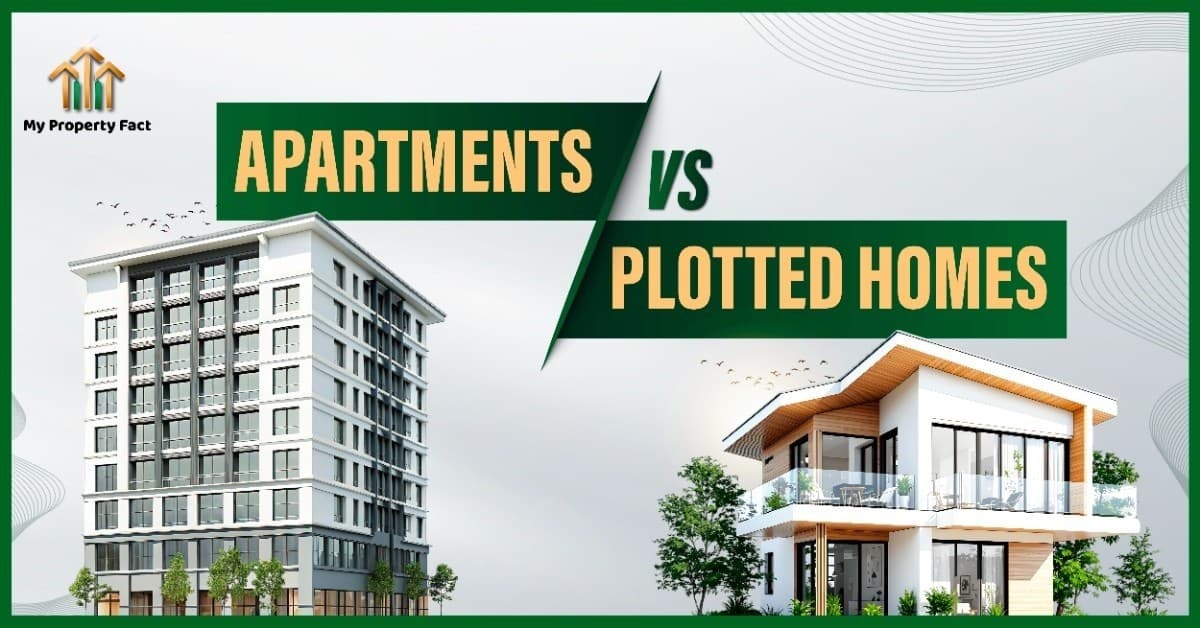
Apartments vs. Plotted Homes: A Veteran Investor’s Field Guide for First-Timers
I’ve spent more than twenty years watching real estate cycles turn, booms that made people feel like geniuses, and slow patches that tested patience. Through all of it, one lesson keeps proving itself: your returns are driven as much by fit as by asset. Buy the thing that matches your horizon, cash-flow needs, and appetite for involvement, and you’ll sleep well. Buy the wrong fit, and even a “good” market can feel like a grind.
This guide distills how I evaluate apartments vs plotted homes, which each suits, and the due diligence steps that protect first-time investors from avoidable mistakes.
The Engine of Returns: Yield vs. Appreciation
Real estate returns have two pistons:
Rental yield: ongoing cash flow as a percentage of purchase price.
Capital appreciation: the property’s value rising over time.
Apartments generally tilt toward yield + moderate appreciation. Plots tilt toward appreciation (land scarcity) and only produce yield after you build. Keep that frame in mind as we compare.
Apartments: Convenience, Liquidity, and Steady Cash Flow
Why apartments work
Easier to rent: A broad tenant pool (working professionals, young families) supports lower vacancy and simpler marketing.
Predictable running costs: Societies formalize maintenance; you won’t be calling plumbers at midnight.
Amenities sell: Security, gyms, pools, play areas; these are compelling to renters and buyers alike.
Prime locations: High-rise supply clusters near transit, office hubs, schools, and malls, demand drivers for both rent and resale.
Financing & liquidity: Banks understand apartments, often offer higher LTVs, and resales have more comparable transactions, making exits faster.
Who apartments suit
First-time investors who want a clean playbook and smoother financing.
Busy professionals/NRIs who need low-touch ownership and can rely on building management.
Yield seekers who value monthly income (even if modest) over “someday” upside.
Short–medium horizon holders (3–7 years) who want the option to exit without drama.
Typical return profile (illustrative)
Gross yield: ~2–4% annually in many large cities; net yields are lower after maintenance, taxes, and occasional vacancy.
Appreciation: Usually tracks local income growth and infrastructure; towers in oversupplied micro-markets may underperform, while supply-constrained neighbourhoods do better.
Apartment pitfalls to avoid
Amenities bloat: Fancy facilities with under-occupied towers can mean steep maintenance that eats yield.
Builder reputation risk: Delays, poor execution, or inflated service charges hurt resale.
Micro-market oversupply: If ten similar projects complete together, rents stagnate and resale discounts creep in.
Plotted Homes (Land): Control, Option Value, and Long-Horizon Upside
Why plots work
You own what appreciates most: Buildings depreciate; land, over long horizons and good locations, tends to appreciate, especially where supply is constrained.
Design freedom & expandability: Build to taste, add floors later, create multiple rental units or a home + office.
Low carry when vacant: No society fees if you haven’t built.
Option value: Keep it bare, build, or redevelop when FSI/FAR rules improve, three different exit paths from one purchase.
Catalyst sensitivity: New transit lines, ring roads, tech parks, or schools can re-rate land values sharply.
Who plots suit
Appreciation-focused investors with 7–12+ year horizons.
Hands-on builders/entrepreneurs comfortable managing architects, approvals, and contractors (or willing to hire that expertise).
Families wanting space & independence (gardens, pet areas, multi-gen layouts).
HNIs/second-generation buyers assembling land near growth corridors to develop later.
Typical return profile (illustrative)
Yield:0% until you construct. After building, yields vary widely: a duplex/triplex or separate studio units can out-yield flats, but require capital and management savvy.
Appreciation: Highly micro-market dependent; the right plot on the right road can outperform apartments significantly over long stretches.
Plot pitfalls to avoid
Title/approval traps: Missing conversion certificates, unclear titles, or non-sanctioned layouts can freeze resale and financing.
Underestimating build complexity: Costs, delays, and contractor risk are real; contingency budgets are essential.
Access issues: Narrow approach roads, pending civic infrastructure, or water constraints can cap resale value.
Financing, Cash Flow, and Risk: The Practical Differences
Loan & cash-flow dynamics
Apartments: Easier loans, higher LTVs, EMIs start immediately, offset partially by rent.
Plots: Land loans can be stricter with lower LTVs; interest benefits are different; no rent until you build. Construction loans require progress-linked disbursals and paperwork.
Break-even gut check (back-of-envelope)
If your apartment costs ₹1 crore and rents for ₹30,000/month, your gross yield ≈ 3.6%. Deduct 0.6–1.0% for maintenance, taxes, and vacancies; net ~2.6–3.0%.
A comparable plot at ₹1 crore yields nothing until developed. If you spend ₹60 lakh to build two 1-BHKs renting at ₹20,000 each, that’s ₹40,000/month on ₹1.6 crore all-in: ~3.0% gross, with higher upside if you add a third unit later, but also higher effort and risk.
Liquidity
Apartments: More buyers, faster transactions, clearer comps.
Plots: Fewer buyers, pricing is negotiated, and sales can take longer, unless you’re in a hot, supply-constrained pocket.
Due-Diligence Checklists (Pin These)
For apartments
Builder track record: Past delivery timelines, litigation, and society ratings.
Occupancy & rent comps: What are achieved rents, not just asking? Vacancy duration?
Maintenance & sinking fund: Fees today and projected; lift/escalator replacements are expensive.
Society health: RWA transparency, reserve funds, pending dues, and defect history.
Micro-market supply: Upcoming completions, new towers nearby, and any distress inventory.
For plots
Title clarity: Mother deed chain, encumbrance certificate, and mutation records.
Land use & approvals: Residential conversion, sanctioned layout, development authority NOCs, and width of approach road.
FSI/FAR & setbacks: Current rules and likely changes; corner plots and wider roads often carry redevelopment premiums.
Infrastructure reality check: Water, sewage, storm drains, power, and street lighting, today, not on paper.
Neighboring land status: Avoid odd-shaped or landlocked parcels; watch for litigation or acquisition notices.
How to Choose: A Simple Three-Lens Framework
Time Horizon
<7 years: Favor apartments for yield and exit optionality.
7–12+ years:Plots if you can wait for appreciation or plan a phased build.
Involvement & Capability
Low involvement:Apartments.
Medium–High involvement:Plots, provided you budget time (or hire a project manager).
Cash-Flow Needs
Need income now:Apartments (tenants subsidize EMI).
Can defer income for higher optionality:Plots, then build for enhanced yields later.
If you’re still on the fence, default to the asset that lets you sleep: the one with fewer moving parts for your current life stage.
Mini Case Studies (Real-World Patterns)
The Young Professional (28, first purchase): A compact 1–2 BHK near transit. Tenants are easy to find, maintenance is predictable, and resale liquidity is high. Over 5–6 years, you build equity and can upgrade.
The Builder-at-Heart (mid-30s, flexible weekends): Buys a sanctioned corner plot on a 30-foot road. Phase 1: ground-plus-one for self-use. Phase 2 (after savings accumulate): add a rental studio and a separate 2-BHK. Yield steps up, and future FSI relaxation is a free option.
The Patient HNI (40s–50s): Takes positions in two growth corridors, both clear-title plots near announced infrastructure. One is developed into two strata units for rent; the other is held for a 7–10 year re-rating.
Common Rookie Errors (and Fixes)
Chasing brochure promises: Verify every claim, amenity completion, handover dates, and operating costs. Fix: Talk to residents in earlier phases.
Ignoring micro-market math: A “deal” in a weak location isn’t a deal. Fix: Study achieved rents, time-on-market, and nearby supply.
Under-insuring build risk (plots): Cost overruns of 10–15% are common. Fix: Include a contingency line item and milestone-based contracts.
Paperwork shortcuts: Title or approval gaps can erase years of gains. Fix: Use a competent property lawyer; never rely solely on seller paperwork.
No exit plan: Liquidity needs arrive unannounced. Fix: Before buying, outline who would buy your asset and why.
The Bottom Line
Choose apartments if you want a steady income, low involvement, easier financing, and faster exits. You’re buying convenience and predictability, and that’s worth a lot, especially early in your investing journey.
Choose plots if you want control, expandability, and long-horizon appreciation, and you’re prepared for the work (or willing to hire it out). The upside is real, but so is the responsibility.
If you remember nothing else, remember this: Real estate rewards clarity. Be crystal-clear about your horizon, your appetite for hassle, and your cash-flow needs. Then pick the asset that aligns with you, not with the neighbor’s story at last weekend’s party. That discipline is what compounds over decades.


.png&w=48&q=75 "X (Twitter)")


